

Hyperpigmentation on neck is driven by the same triggers as facial pigmentation: UV exposure, friction, hormones, and post-inflammatory response. But the neck is significantly more vulnerable because it has thinner skin, fewer oil glands, and is almost always under-protected from SPF. Treatment requires both melanin regulation and barrier support. Results typically appear at 6 to 10 weeks with consistent daily serum use and SPF extended to the collarbone.
Individual results vary based on skin type, concern severity, and consistency of use.The neck gets overlooked in most skincare routines, and that neglect is exactly what makes it one of the earliest and most visible areas to develop dark patches. Here are the five main triggers behind hyperpigmentation in neck skin.
Most people apply facial sunscreen to their cheeks, nose, and forehead, and stop at the jawline. The neck receives comparable daily UV exposure but almost no SPF protection. Over years, this creates a visible darkening gradient between a somewhat protected face and a chronically unprotected neck.
UV is the largest single trigger for melanin overproduction on any exposed skin surface, and the neck, with thinner skin, responds to UV damage more dramatically than the face. This is the same mechanism behind facial tan pigmentation. The how to get rid of tan from face guide covers this UV melanin pathway.
Neck darkening from friction is a common but under-recognised cause, especially in India. Daily sources of neck friction include:
Each friction event triggers low-grade inflammation that deposits melanin, accumulating into visible pigmentation over months and years.
Any inflammation on the neck, from skin infections, folliculitis, allergic reactions to jewellery metal (nickel is a common allergen), or harsh product reactions, leaves a melanin deposit during healing. On Indian skin, PIH deposits are darker, larger, and longer-lasting than on lighter skin types.
Melasma, the hormonal pigmentation pattern common in Indian women, does not always stop at the jawline. It can extend onto the neck, particularly the lateral (side) neck areas. This is often missed because most melasma guides focus exclusively on the face.
The neck is exposed to the same pollution, particulate matter, and UV that affects the face, typically with no antioxidant protective layer in the skincare routine. In Indian urban environments where air quality is poor, oxidative stress-driven pigmentation accumulates visibly on the neck alongside sun damage.
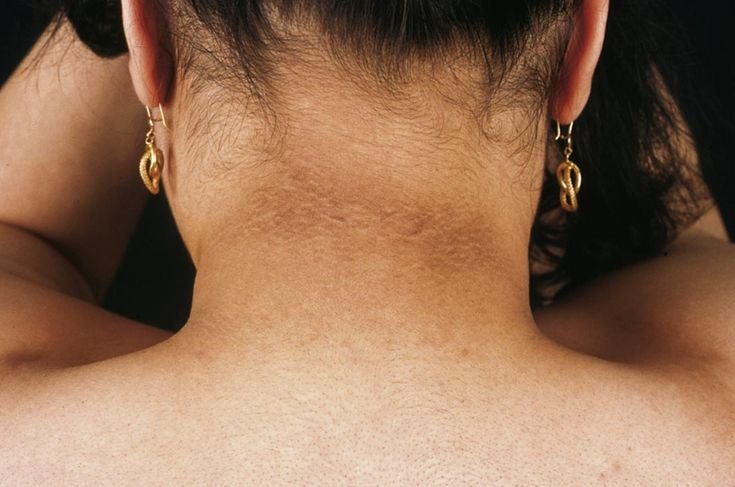
Before treating neck darkening as hyperpigmentation, there is one condition worth knowing about.
Acanthosis nigricans is a specific type of neck darkening that looks different from typical hyperpigmentation. It presents as:
Acanthosis nigricans is associated with insulin resistance and can be an early indicator of prediabetes or type 2 diabetes. It will not respond to topical serums because the darkening is not driven by UV or PIH. It is driven by an internal metabolic signal.
The rest of this guide addresses flat, pigmented hyperpigmentation on the neck: UV-driven, friction-driven, or post-inflammatory in origin.
Neck skin has three biological differences from facial skin that make hyperpigmentation in neck harder to treat with face-only products:
Faster UV damage penetration.
Less natural protection, more prone to barrier breakdown.
Cumulative UV damage is usually more advanced than on the face by the time treatment begins.
Effective treatment for how to reduce neck blackness requires a gentle melanin-regulating formula, barrier support specific to neck skin, and extended SPF down to the collarbone.
The Anti-Pigmentation Serum is formulated around multi-stage melanin regulation with verified actives:
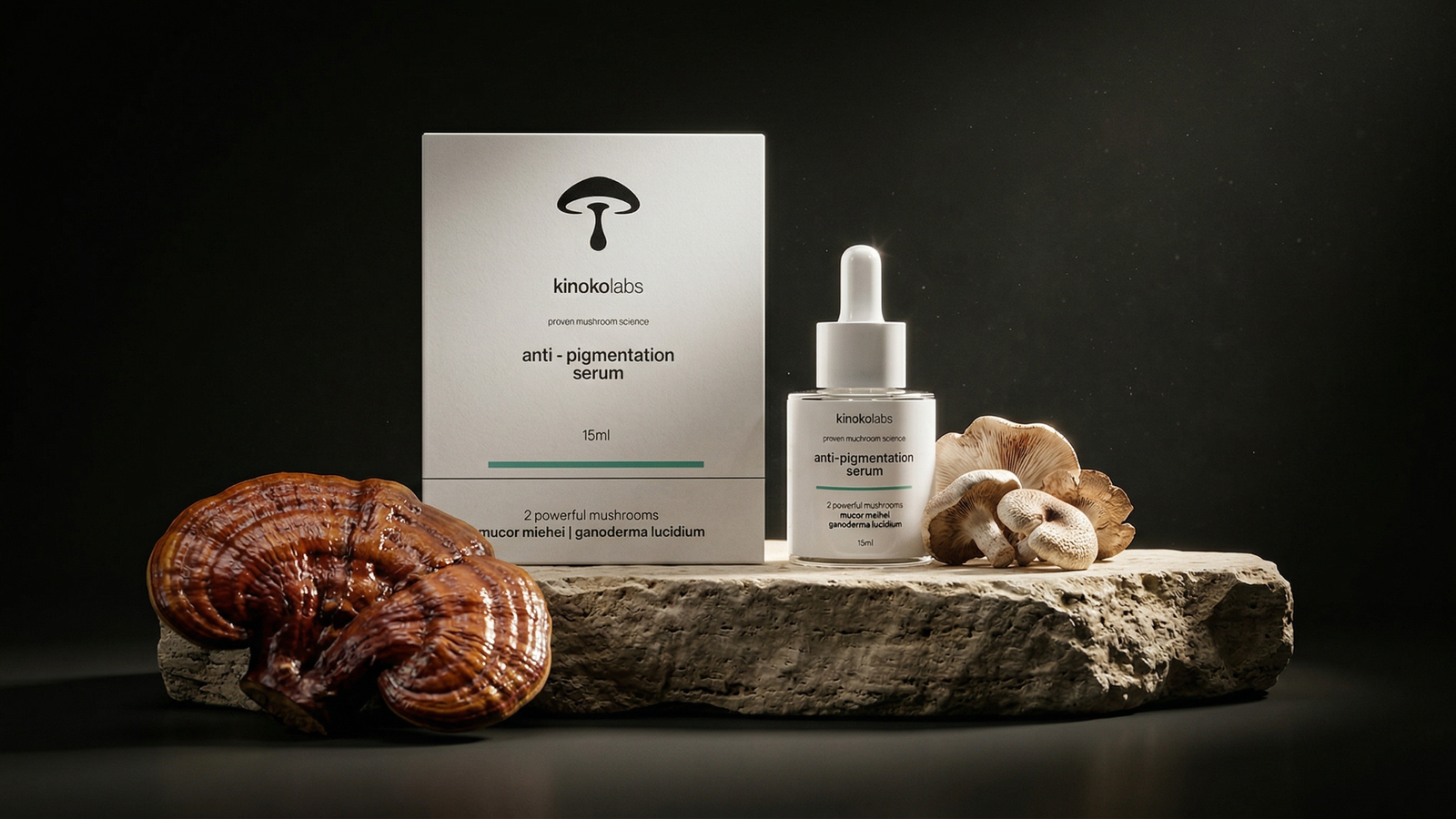
Reduction in dark spots at 28 days with consistent twice-daily use.Based on Kinoko Labs' internal clinical testing. Individual results vary.
Neck hyperpigmentation rarely appears in isolation. It typically comes with skin texture changes, mild laxity, and barrier vulnerability from years of friction and UV. The Kinoko Labs Neck Firming Serum addresses the structural side with its triple-mushroom complex and neck-specific botanical actives:
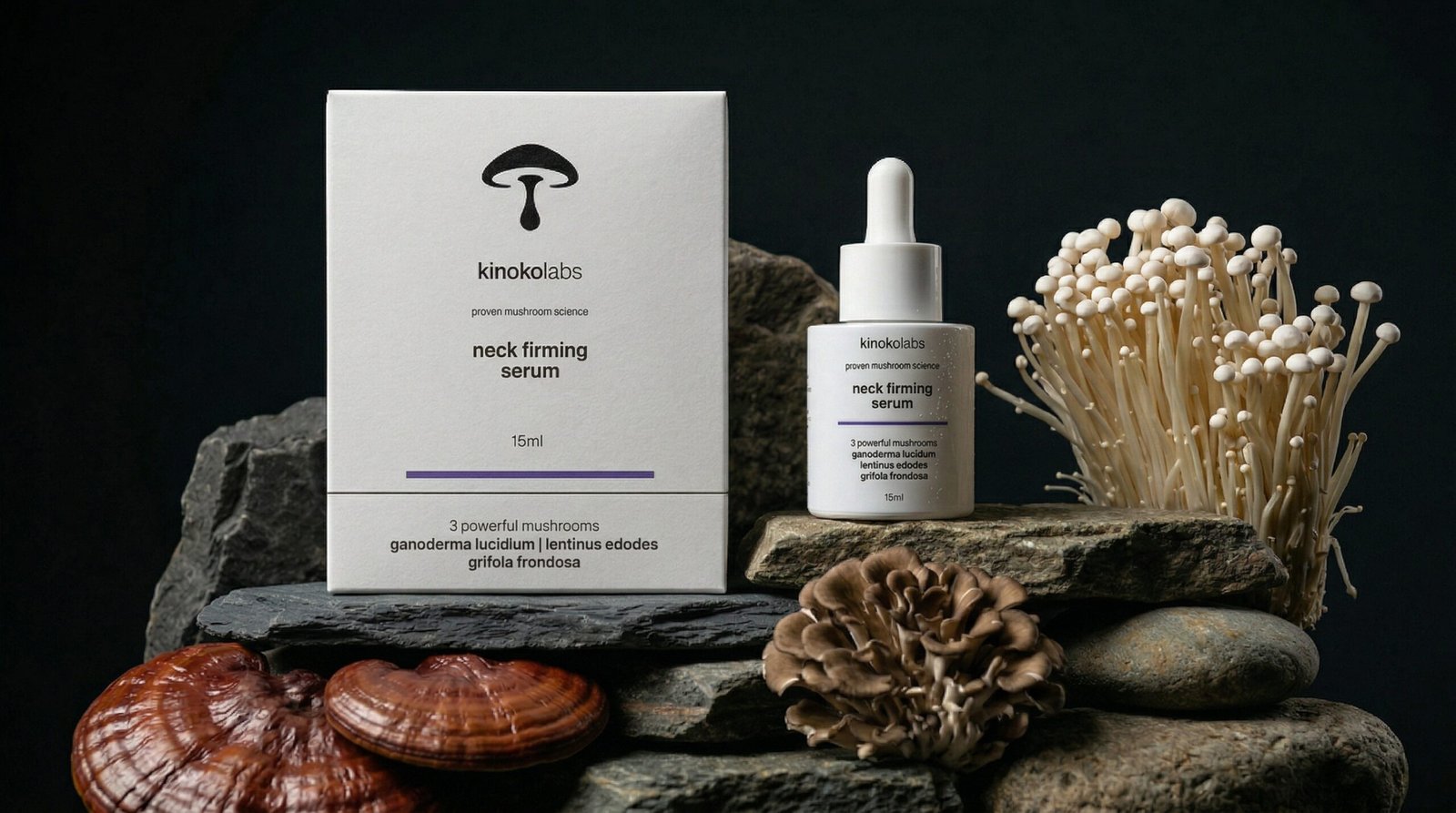
The science behind mushroom bioactives covers how the triple-mushroom complex in the Neck Firming Serum specifically supports the thinner neck dermis.
Sequencing note: Anti-Pigmentation Serum first (lighter, acts at melanin level), Neck Firming Serum second (richer, barrier/structural level). Always finish with moisturiser.
This is how most neck hyperpigmentation develops.
Remove necklaces. Choose non-nickel metals when possible.
Photosensitising fragrance compounds intensify UV pigmentation. Apply to clothes only.
High-percentage AHAs or physical scrubs damage the thinner neck barrier and worsen PIH.
High pH strips the already-vulnerable neck skin barrier.
Neck hyperpigmentation responds more slowly than facial pigmentation.
Maintenance is ongoing. The neck's chronic UV and friction triggers do not stop. Long-term results require continuing SPF and periodic maintenance serum use even after initial clearing.
The main causes are UV accumulation from years of under-protected sun exposure, friction from collar and jewellery contact, post-inflammatory hyperpigmentation from skin irritation, hormonal melasma extending below the jawline, and pollution-driven oxidative stress. Most neck darkening involves more than one trigger simultaneously.
Daily SPF from hairline to collarbone, reducing friction sources (soft collar fabrics, removing jewellery overnight), and avoiding perfume on neck skin before UV exposure are the most impactful steps. Melanin-regulating serum use clears existing darkening over 8 to 12 weeks.
Same triggers, different skin. Neck skin is thinner, has fewer oil glands, and accumulates more UV damage from chronic under-protection, so pigmentation deposits faster and needs gentler treatment with more emphasis on barrier support.
If the darkening is thick, velvety, and rough in texture, particularly in the skin folds at the back of the neck or armpits, it may be acanthosis nigricans, which is associated with insulin resistance and warrants a medical consultation. Flat, discoloured patches without texture change are typical hyperpigmentation and respond to topical treatment.
Yes. The Anti-Pigmentation Serum applied to both the face and neck addresses the same melanin biology. For the neck specifically, adding the Neck Firming Serum addresses the structural and barrier component that facial skin does not need as much.
First visible lightening at 6 to 8 weeks. Meaningful improvement at 10 to 12 weeks. Deep, longstanding patches may take 4 to 6 months of consistent treatment. Daily SPF throughout is essential. Without it, new UV deposition continues and counteracts the clearing.
This content is for informational purposes and is not medical advice. Individual results vary based on skin type, concern severity, and consistency of use. If you notice thick, velvety, or textured neck darkening, consult a qualified dermatologist or physician before starting topical treatment.

