

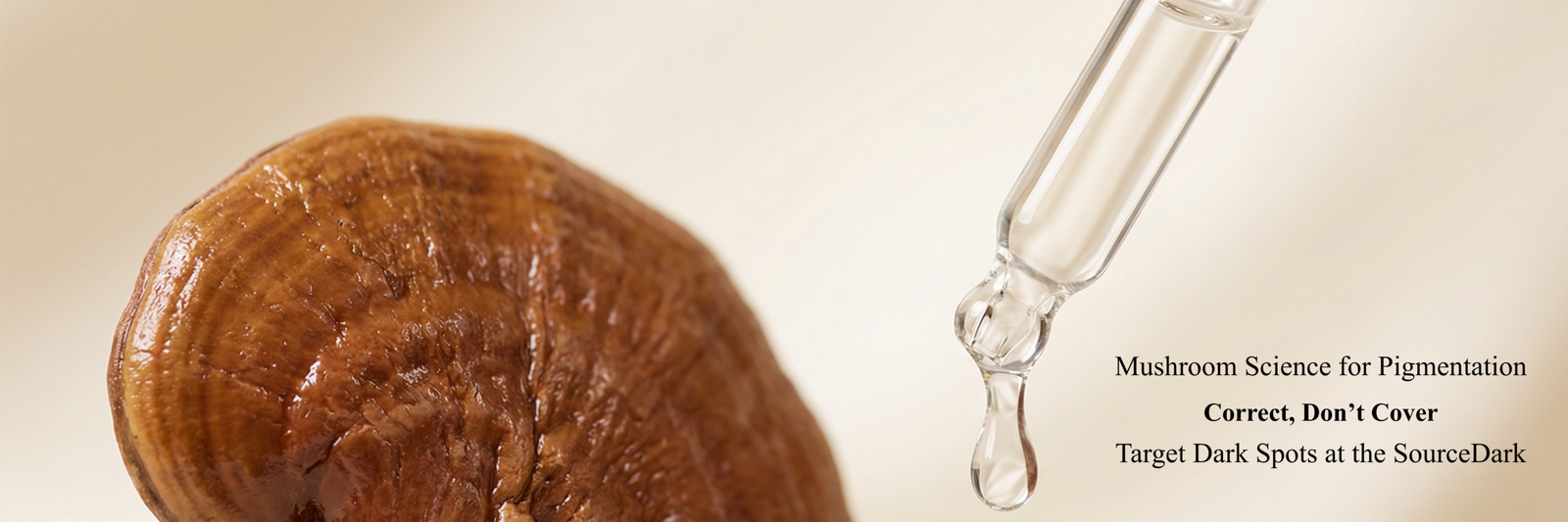
Best Serum for Hyperpigmentation in India
Hyperpigmentation is India's most common skin concern, and yet most serums either rely on synthetic bleaching agents, take months with little visible change, or are too harsh for Indian skin already dealing with heat, pollution, and UV stress.
In 2026, the conversation around the best serum for hyperpigmentation is shifting, away from aggressive chemicals and toward intelligent, nature-powered actives that work with your skin biology, not against it. Kinoko Labs' Anti-Pigmentation Serum is at the forefront of this shift, bringing proven mushroom science to the problem of dark spots, uneven tone, and melasma.
Understanding Hyperpigmentation
Hyperpigmentation is a broad term for any condition where patches of skin become darker than the surrounding area. It includes:
- Melasma: hormonal brown patches, usually on cheeks and forehead
- Post-inflammatory hyperpigmentation (PIH): dark marks left by acne, wounds, or irritation
- Sun-induced dark spots: caused by cumulative UV damage
- Age spots: flat spots that develop with age and sun exposure
Each type requires a slightly different approach. Not sure which type you have? Our skin pigmentation types guide breaks down all five types with treatment advice for each.
What Makes a Serum the Best for Hyperpigmentation?
- Tyrosinase inhibitors: block melanin formation at the source
- Antioxidants: neutralise free radicals that worsen pigmentation
- Skin barrier support: prevent future damage while healing current spots
- Clinical testing: proof it works, not just marketing claims
- Gentle formulation: especially important for sensitive Indian skin
Why Mushroom Actives Are the Future of Hyperpigmentation Serums
Mushrooms have been used in traditional Asian skincare for centuries, and science is now validating what those traditions always knew. Two key actives power the Kinoko Labs formula.

Hydrolyzed Reishi mushroom extract contains beta-glucans and polysaccharides that simultaneously strengthen the skin barrier and brighten existing pigmentation. Its antioxidant capacity significantly outperforms many conventional actives, creating a powerful shield against UV-triggered melanin surges.

This rare fungal bioactive works at the cellular level to accelerate skin renewal, helping shed hyperpigmented surface cells faster and consistently revealing brighter, more even skin beneath with each cycle.
These two mushroom actives are paired with clinically proven brightening companions like Niacinamide, Licorice Root, Turmeric, and Pea Extract, creating a complete, multi-pathway approach to hyperpigmentation.
Ingredient Deep Dive
Here's why each active earns its place in India's best serum for pigmentation and dark spots:
Mushroom Science vs. Conventional Approaches
⚡ Conventional
- Hydroquinone, kojic acid, AHAs
- Sensitivity and purging
- Increased sun sensitivity
- Often irritating on first use
🍄 Kinoko Labs
- Multiple natural brightening pathways
- No irritating concentrations needed
- Gentle for first-time and sensitive skin
- Reinforces the skin barrier throughout
Kinoko Labs takes a gentler, smarter route, combining multiple natural brightening pathways so no single ingredient needs to work at irritating concentrations. The result is a dark spot removal serum equally suitable for first-time users, sensitive skin types, and those who've had reactions to conventional formulas.
How to Build Your Anti-Pigmentation Routine
Sunscreen is non-negotiable when using a hyperpigmentation serum. UV exposure directly triggers new melanin production, and without sun protection your serum is fighting an uphill battle every single day.
clinically tested · mushroom-powered · natural brightening
Explore the collection
dark spot guide | pigmentation types | glowing skin | shop serum
