


What Is the Difference Between Fine Lines and Wrinkles?
Most people use fine lines vs wrinkles as interchangeable terms. They're not, and the difference actually matters for how you treat them.
Fine Lines: The Early Signals
Fine lines are shallow creases in the upper layers of the skin, visible when the face is in motion, sometimes visible at rest, but typically reversible with proper hydration. They're the early warning system. Skin showing fine lines is telling you that collagen production has slowed and the barrier is struggling to retain moisture. The structure underneath is still largely intact.
Wrinkles: The Deeper Structural Change
Wrinkles sit deeper, in the dermis, not just the epidermis. They're formed from accumulated collagen breakdown combined with years of repetitive muscle movement that has physically etched creases into the skin structure. Wrinkles are visible at rest, don't disappear with hydration, and need collagen-supporting actives working over weeks to visibly soften.
Fine Lines vs Wrinkles at a Glance
| Feature | Fine Lines | Wrinkles |
|---|---|---|
| Depth | Shallow, upper skin layers | Deep, in the dermis |
| Visible at rest? | Sometimes | Yes, always |
| Main cause | Dehydration and early collagen decline | Structural collagen breakdown and muscle movement |
| Age of onset | Often mid-to-late 20s | Typically 30s and beyond |
| Reversible? | Often yes, with consistent hydration and barrier care | Can be softened but not fully reversed topically |
| Respond to hydration alone? | Yes, meaningfully | No, needs collagen support |
| Timeline for visible improvement | 2 to 4 weeks | 8 to 12 weeks minimum |
What Causes Fine Lines and Wrinkles on the Forehead?
Fine lines and wrinkles on the forehead are often the first visible aging sign people notice, and they tend to cause the most concern. Understanding why they appear there first helps explain what the right treatment needs to do.
- Cause 01
Expression Movement and Muscle Memory
The forehead is one of the most expressive areas of the face. Frowning, raising eyebrows, squinting, and concentrating all contract the frontalis and corrugator muscles repeatedly throughout the day. Over years, the skin folds along these consistent crease points, and eventually those creases become etched, first as fine lines when you move, then as permanent wrinkles when you don't.
- Cause 02
Collagen and Elastin Decline
Collagen production slows by approximately 1% per year after your mid-20s. Elastin, the protein that lets skin snap back after stretching, follows the same trajectory. As both decline, the skin loses its ability to fully recover from the daily folding and stretching caused by expression movement. Fine lines that used to disappear when you relaxed your face start holding their shape.
- Cause 03
Sun Damage (Photoaging)
UV breaks down collagen and elastin fibres directly. The forehead is almost always sun-exposed, rarely covered by hair, and frequently missed when applying sunscreen carefully. Cumulative photoaging on the forehead adds a layer of structural damage on top of the normal aging process.
- Cause 04
Dehydration and Barrier Breakdown
A dehydrated skin barrier can't plump the skin sufficiently to smooth early creases. Fine lines and wrinkles on the forehead often look dramatically worse on days of low water intake, poor sleep, or after alcohol, each of which dehydrates skin rapidly. This isn't permanent structural change; it's temporary surface dehydration amplifying what's already there.
- Cause 05
Screen Habits and Stress
Chronic stress raises cortisol, which accelerates collagen breakdown. Squinting at bright screens for hours also concentrates expression movement between the brows and across the forehead, exactly where the earliest lines typically form.
At What Age Do Fine Lines and Wrinkles Start Appearing?
Earlier than most people expect. Fine lines often begin in the mid-20s, particularly around the eyes and on the forehead, as a combination of early collagen slowdown and cumulative UV exposure. Most people don't notice them until their early 30s because they've been developing slowly.
Wrinkles, the deeper and more static creases, typically become visible in the 30s and become more pronounced through the 40s as collagen loss accelerates. Sun exposure history matters enormously here. Someone who used daily SPF consistently from their 20s and someone who didn't can look visually different by a decade by their 40s.
Can Fine Lines Be Reversed?
Yes, meaningfully. Because they sit in the upper skin layers and are partly driven by dehydration and barrier breakdown, the right combination of hydration, antioxidant support, and barrier recovery can visibly smooth them within 2 to 4 weeks. This isn't eliminating the underlying biology; it's restoring enough surface resilience that the lines become less visible.
Wrinkles are a different conversation. Deep, structurally formed wrinkles can be softened and their progression slowed with consistent collagen-supporting activities, but "reversed" is an overstatement for topicals. Clinical intervention (retinol therapy, laser, filler) delivers more dramatic wrinkle reversal for established deep lines. Topical serums work best as prevention and as maintenance alongside clinical treatment.
What Ingredients Actually Prevent Fine Lines and Wrinkles?
This is where the market gets confusing fast. Most anti-aging actives fall into three categories: synthetic retinoids (retinol), synthetic peptides, or plant-derived collagen supporters. Here's what the evidence actually supports.
- Multi-depth hydration (hyaluronic acid at different molecular weights)
- Antioxidants that protect collagen from UV-driven oxidative damage
- Gentle natural AHAs that support surface cell renewal without barrier disruption
- Barrier-strengthening oils that prevent transepidermal water loss
- Collagen-supporting botanicals (Centella Asiatica, Sacha Inchi omega complex)
- Antioxidant actives that slow the free-radical breakdown of existing collagen
- Adaptogenic plant extracts that reduce cortisol-driven collagen degradation
What Ingredients Does the Kinoko Labs Anti-Wrinkle Serum Use?
The Kinoko Labs Anti-Wrinkle Serum is an entirely botanical formula, with no synthetic retinol and no synthetic peptides. It works through plant-powered actives that support the skin's natural collagen protection mechanisms:
- Ganoderma Lucidum (Reishi) Mushroom Stem Extract Antioxidant with anti-inflammatory properties that protects existing collagen from environmental oxidative damage.
- Sodium Hyaluronate Multi-depth hydration that plumps fine lines and supports the skin barrier.
- Hibiscus Rosa-Sinensis Flower Water Natural source of alpha-hydroxy acids; supports surface cell renewal without the sensitivity risk of synthetic AHAs.
- Hydrolyzed Plukenetia Volubilis (Sacha Inchi) Seed Extract Omega-3 and omega-6 rich; supports skin elasticity and membrane integrity.
- Rosa Rubiginosa (Rosehip) Seed Oil Natural vitamin A precursors that support cellular renewal without retinol-class irritation.
- Saccharide Isomerate Deep long-lasting hydration for barrier support.
- Withania Somnifera (Ashwagandha) Root Extract Adaptogenic antioxidant that helps reduce cortisol-driven collagen breakdown.
- Centella Asiatica Extract Long-studied for collagen synthesis support and anti-inflammatory action.
- Ocimum Sanctum (Tulsi) Leaf Extract Antioxidant botanical from Indian skincare tradition.
- Hydrolyzed Plant Proteins (Wheat, Oat, Sweet Almond) Lightweight firming proteins for surface smoothness.
- Calendula Officinalis Flower Extract Soothing and anti-inflammatory.
The science behind mushroom bioactives covers how Ganoderma Lucidum specifically protects dermal collagen from oxidative degradation, the primary environmental driver of fine lines and wrinkles.
How Is the Kinoko Labs Anti-Wrinkle Serum Different From Typical Anti-Aging Serums?
This is worth being specific about, because "anti-aging serum" describes an enormous range of products with fundamentally different approaches.
| Feature | Retinol-Based Serums | Synthetic Peptide Serums | Kinoko Labs Anti-Wrinkle Serum |
|---|---|---|---|
| Primary active | Retinol (synthetic Vitamin A) | Palmitoyl peptides (lab-synthesised) | Ganoderma Lucidum + Botanical complex |
| How it works | Accelerates cell turnover | Signals fibroblasts to produce collagen | Antioxidant protection + natural collagen support |
| Risk of irritation | High: peeling, redness, photosensitivity | Low to moderate | Low: gentle botanical actives |
| Requires sun avoidance | Yes: retinol increases photosensitivity | No | No |
| Suitable for sensitive skin | Rarely | Sometimes | Yes |
| Indian botanical actives | None | None | Ashwagandha, Tulsi, Centella, Sacha Inchi |
| Contains synthetic fragrance | Often | Often | No: fragrance-free |
| Mechanism for Indian skin | Not specifically calibrated | Not specifically calibrated | Multi-botanical approach suited to Indian skin conditions |
The core trade-off with retinol is well-documented: it delivers results but requires a significant tolerance-building period (6 to 12 weeks of irritation, peeling, and photosensitivity) and can't be used during pregnancy. The Kinoko Labs formula achieves collagen support and surface renewal through botanicals that don't carry these restrictions.
How to Prevent Fine Lines and Wrinkles Naturally: Daily Routine
Preventing fine lines and wrinkles is significantly easier than reversing them. The earlier the routine starts, the better.
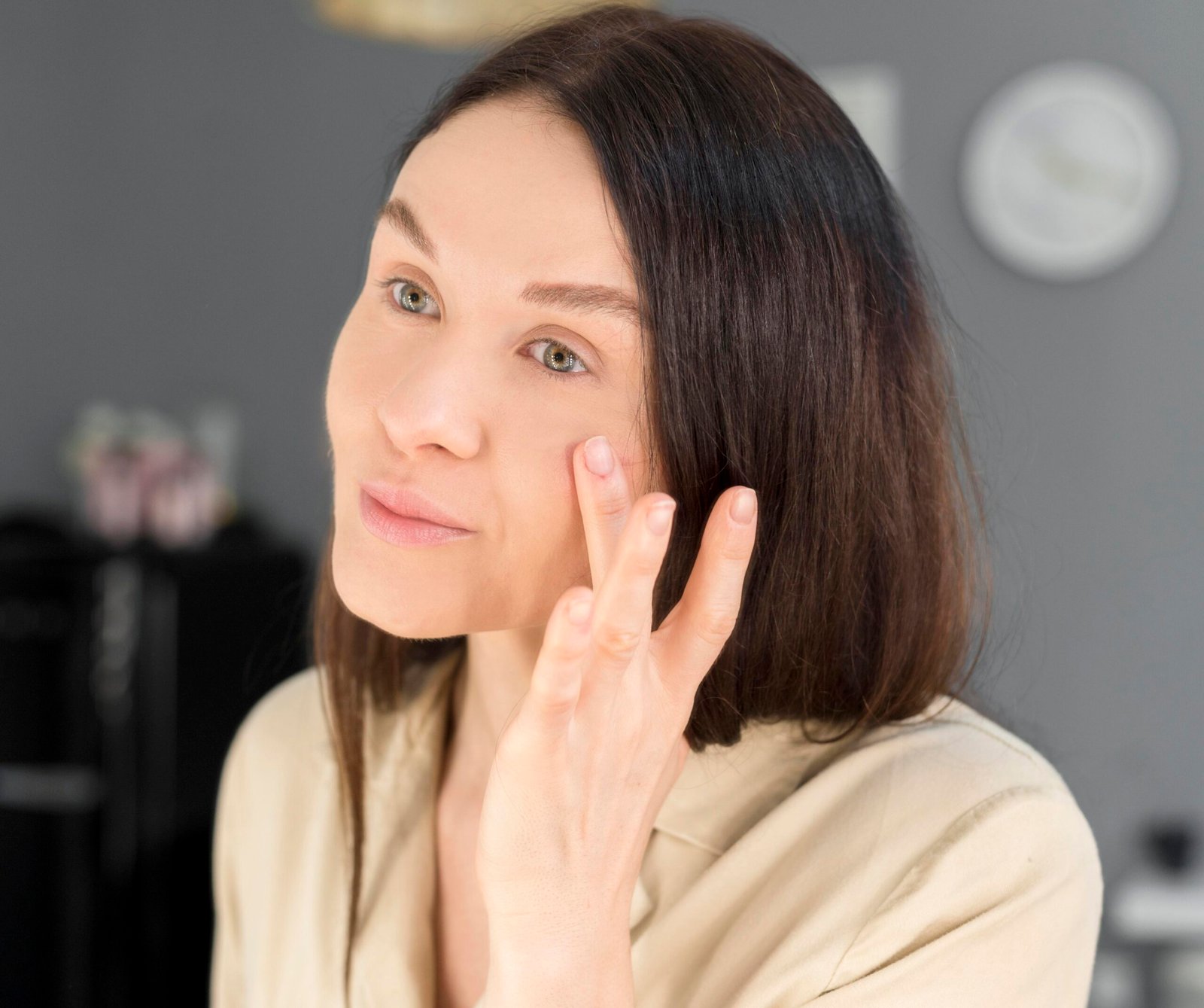
Morning Routine
- Gentle low-pH cleanser: no bar soap
- 2 to 3 drops of Kinoko Labs Anti-Wrinkle Serum across the full face and extending down the neck
- Wait 60 seconds for absorption
- Lightweight moisturiser
- Broad-spectrum SPF 30+: the most powerful anti-aging step available
Evening Routine
- Double cleanse to remove SPF, makeup, and pollution
- 2 to 3 drops of Kinoko Labs Anti-Wrinkle Serum
- Nourishing night cream
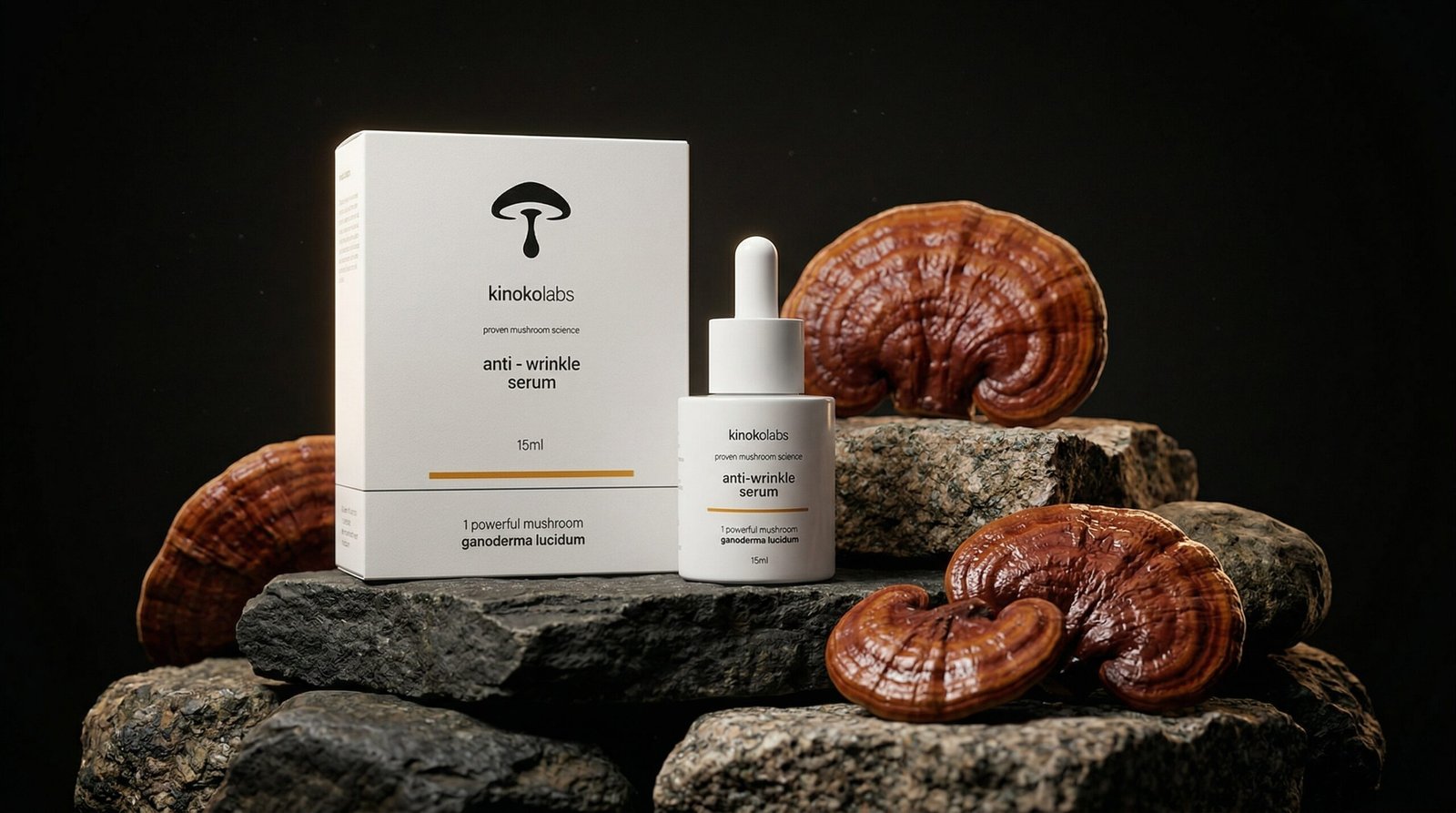
A 100% botanical formula with Reishi Mushroom Extract, Ashwagandha, Centella Asiatica, and multi-depth hyaluronic acid. No synthetic retinol. No synthetic peptides. No fragrance. Suited for all skin types, including sensitive skin, for daily year-round use.
Frequently Asked Questions
Fine lines are shallow surface creases in the upper skin layers, often reversible with hydration and barrier care. Wrinkles are deeper structural creases formed by collagen breakdown and muscle memory. They need longer treatment timelines and collagen-supporting actives to soften.
Repetitive expression movement (frowning, raising eyebrows, squinting) over years, combined with collagen decline, UV damage, and dehydration. The forehead gets heavy daily UV exposure and constant expression movement, making it one of the first visible aging zones.
Fine lines often begin in the mid-to-late 20s. Visible wrinkles typically appear in the 30s. Sun exposure history makes a significant difference; consistent SPF use from the 20s can delay visible wrinkles by years.
Fine lines, yes, meaningfully. Proper hydration, barrier care, and antioxidant support can visibly smooth them within 2 to 4 weeks. Deep wrinkles can be softened and their progression slowed but aren't fully reversible with topicals alone.
Yes, with realistic expectations. A botanical serum with multi-depth hydration and antioxidant collagen protection visibly improves fine lines in 2 to 4 weeks. Deeper forehead wrinkles require 8 to 12 weeks of consistent use before meaningful structural improvement.
Retinol accelerates cell turnover through synthetic Vitamin A, effective but it causes peeling, redness, and photosensitivity, especially during a 6 to 12 week tolerance-building phase. A botanical serum achieves collagen support and surface renewal through plant actives without these side effects, making it suitable for sensitive skin and daily year-round use.
Both. The biological cause is collagen decline (aging), but lifestyle factors accelerate or slow it significantly. Chronic stress, UV exposure, poor sleep, dehydration, and heavy squinting at screens all intensify forehead fine lines beyond what the aging process alone would produce.
