
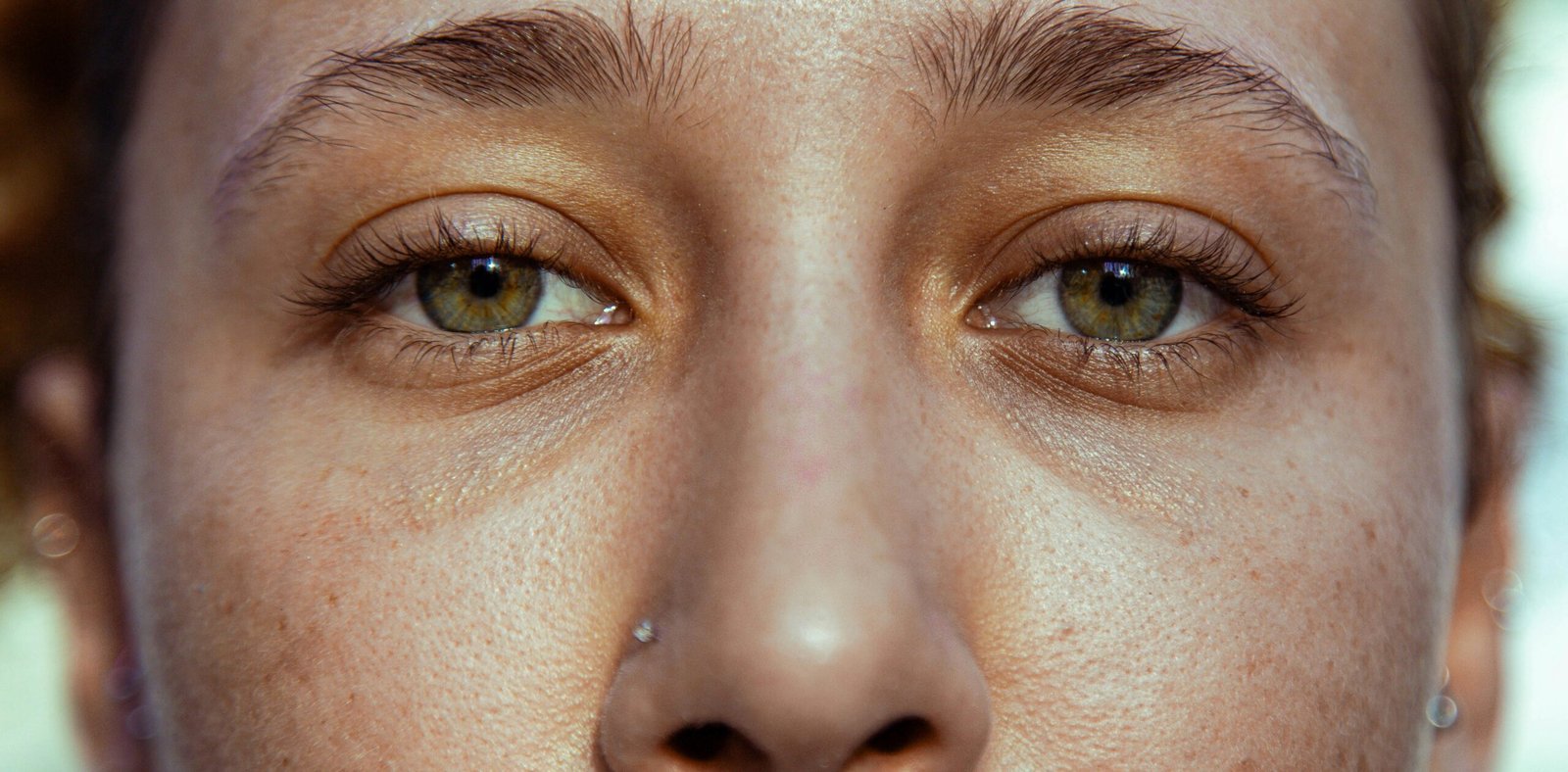
The biology behind inherited dark circles and what targeted treatment actually does.
Genetic dark circles are caused by inherited melanin overactivity and skin thinness, not sleep loss or dehydration. They require a targeted under-eye serum with melanin-regulating and collagen-supporting actives, used twice daily for 6 to 8 weeks. General face creams cannot reach the underlying cause. Individual results vary.
If you've inherited dark circles, you've likely tried eight hours of sleep, two litres of water, and half a dozen eye creams with little to show for it. That's because hereditary dark circles are a fundamentally different biological entity from tiredness discoloration. The medical term is periorbital melanosis, and it doesn't respond to lifestyle correction.
Pigment-producing cells in the periorbital zone are more active at baseline, inherited, not acquired. No amount of rest changes this.
Periorbital skin is already 3 to 4 times thinner than the rest of your face. Some people inherit even thinner tissue, making blood vessels more visible.
Deep orbital sockets and tear-trough shadowing cast shadows that no topical product can lift. This is anatomy, not pigmentation.
Identifying the correct type determines the right treatment path. The distinction is biological, not cosmetic.
| Feature | Hereditary Dark Circles | Tiredness Dark Circles |
|---|---|---|
| Present since childhood or teens | Often yes | No, develop in adulthood |
| Improve with 8+ hours of sleep | No | Yes |
| Improve with more water intake | No | Partially |
| Present in a parent or sibling | Usually | Not necessarily |
| Season-dependent | No, year-round | Can worsen in winter |
| Appearance | Brown or hollow | Bluish-purple |
| Needs targeted serum | Yes | Lifestyle first |
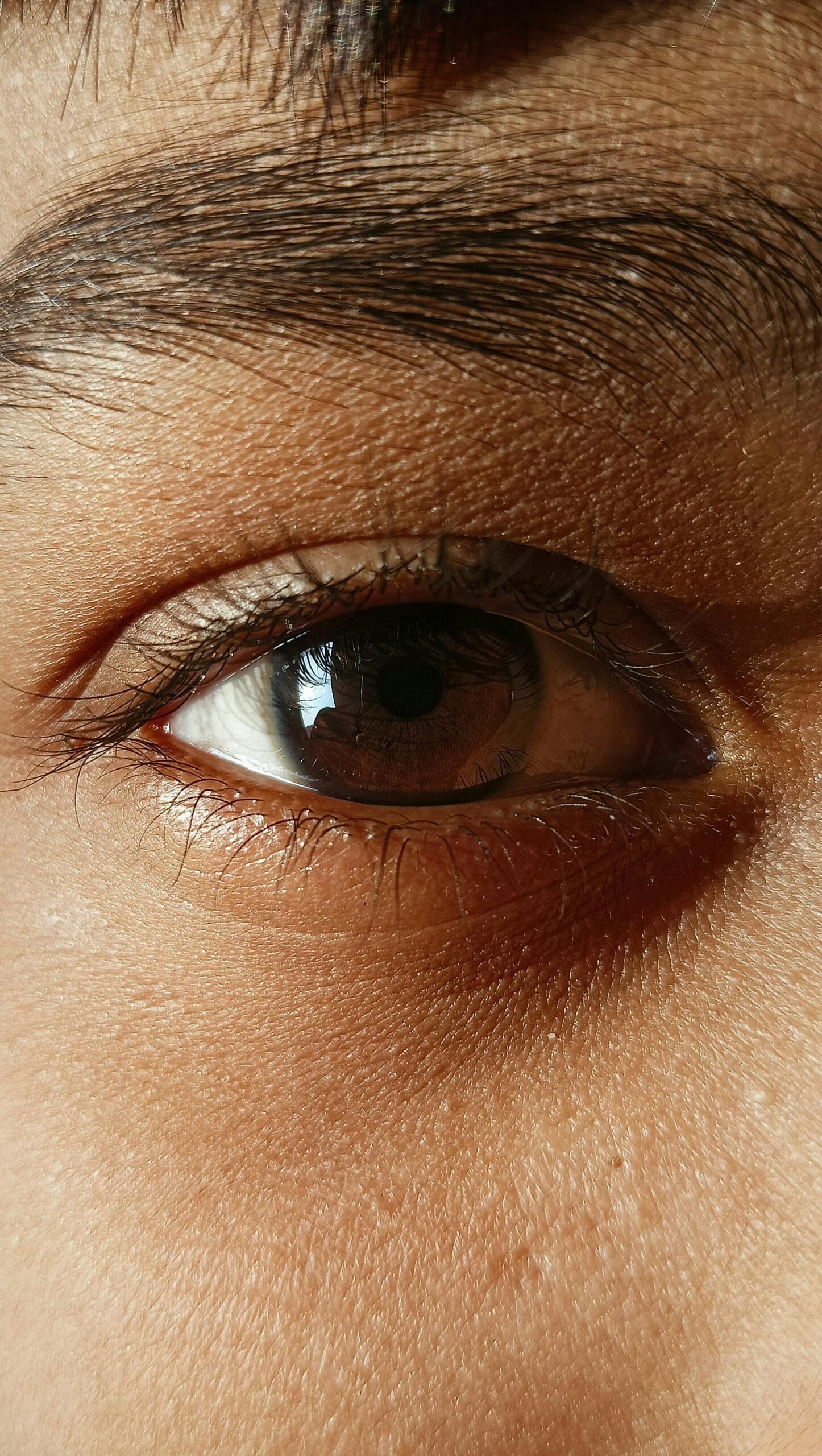
Clinical improvement is measured at 28 days with twice-daily use and continues over 6 to 8 weeks. Because the genetic driver never disappears, maintenance use is indefinite. Discontinuing treatment allows melanin activity to return toward baseline over a few months.
Clinical improvement is measured at 28 days with twice-daily use and continues over 6 to 8 weeks. Because the genetic driver never disappears, maintenance use is indefinite. Discontinuing treatment allows melanin activity to return toward baseline over a few months.
Most people present with a combination of types. An effective formula works on all three at once. General moisturisers address none of them.
Driven by inherited melanin overactivity, appearing brown. Requires tyrosinase inhibition at the cellular level.
Driven by dermal thinning and tear-trough shadowing, appearing hollow. Requires collagen support to thicken the periorbital dermis.
Driven by visible sub-surface blood vessels, appearing blue-purple. Requires anti-inflammatory action to calm vascular dilation.
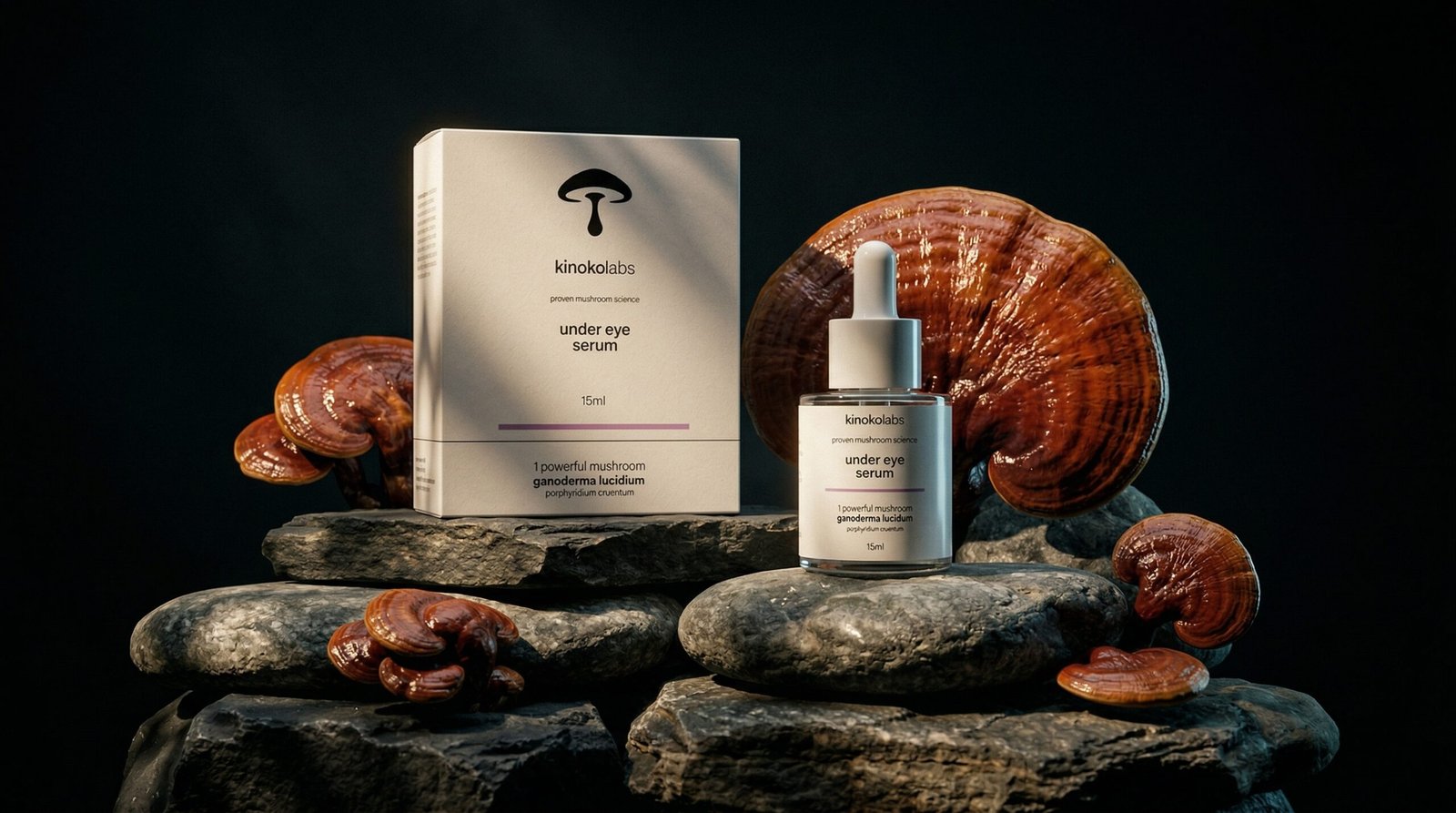
A featherlight gel-cream formulated specifically for periorbital skin, not adapted from a facial product. Addresses pigmentation, structural thinning, and vascular visibility simultaneously.
Not all actives are suited to the periorbital zone. These have established activity at this depth and sensitivity level.
Ganoderma Lucidum
Reishi Mushroom
Antioxidant with tyrosinase-inhibiting activity, the enzyme that drives melanin production. No peeling or sensitivity risk.
Tremella Fuciformis
Snow Mushroom
Polysaccharide with strong water-binding capacity, reducing dehydration-driven darkening that intensifies structural and vascular dark circles.
Periorbital-grade Peptides
Signal Peptides
Support collagen production in the thin under-eye dermis without retinol-class irritation, gradually thickening the periorbital dermis.
Niacinamide
Vitamin B3
Reduces melanin transfer and strengthens the skin barrier. Useful for allergy-driven inflammation that compounds hereditary pigmentation.
Pea Peptide
Pisum Sativum
Plant-derived tyrosinase inhibitor that works alongside Ganoderma Lucidum for two-stage melanin regulation.
Rhizomucor Miehei
Enzymatic Exfoliant
Gentle enzymatic exfoliation that improves surface texture without barrier disruption, suited to the delicate periorbital zone.
Apply morning and evening for at least 6 to 8 weeks. Application technique matters as much as the formula itself.
Cleanse
Remove makeup, sunscreen, and pollution with a gentle low-pH cleanser.
Pat dry, don't rub
Damp skin dilutes active concentration. Pat gently to avoid friction-triggered inflammation.
Dispense 1 to 2 drops
Enough for both under-eye zones. More product risks migration into the eye.
Apply with the ring finger only, press don't rub
Press along the orbital bone from inner corner outward. Rubbing triggers post-inflammatory hyperpigmentation.
Cover the full periorbital zone
Include the full orbital bone, not just the immediate under-eye area.
Wait 60 seconds
Allow absorption before applying the next product in your routine.
Follow with moisturiser
Seal in Tremella Fuciformis hydration with your regular moisturiser.
Morning: SPF 30+ is non-negotiable
UV re-triggers the melanin the serum is correcting. Skipping SPF actively undermines treatment.
Using a general face moisturiser on the under-eye area
Doesn't deliver melanin regulation or collagen support. Molecular weight is too high to penetrate periorbital dermis.
Quitting after two or three weeks
Clinical change is measured at 28 days minimum. Stopping early means leaving before results arrive.
Rubbing during application
Friction triggers post-inflammatory hyperpigmentation, actively worsening the condition you're treating.
Skipping morning SPF
UV re-activates the melanin the serum is correcting. SPF is not optional, it's part of the treatment protocol.
Treating only one component when two are present
Most hereditary dark circles are combination pigmented and structural. A single-mechanism formula addresses only part of the problem.
Applying a facial serum to the under-eye zone
Facial serums are calibrated for skin 2 to 4 times thicker. They carry irritation and milia risk in this zone.
Most hereditary dark circles are combination presentations. The Discovery Box lets you test all five serums before committing to full sizes.
Hereditary dark circles, puffiness, under-eye fine lines
Under Eye Serum
Periorbital pigmentation extending to the cheekbone area
Anti-Pigmentation Serum
Age-related fine lines and facial sagging around the eyes
Anti-Wrinkle Serum
Neck and decollete laxity alongside facial ageing
Neck Firming Serum
Lip volume loss and lip lines
Lip Plumping Serum
Test all five serums before committing to full sizes
Discovery Box — 5 Serums

