

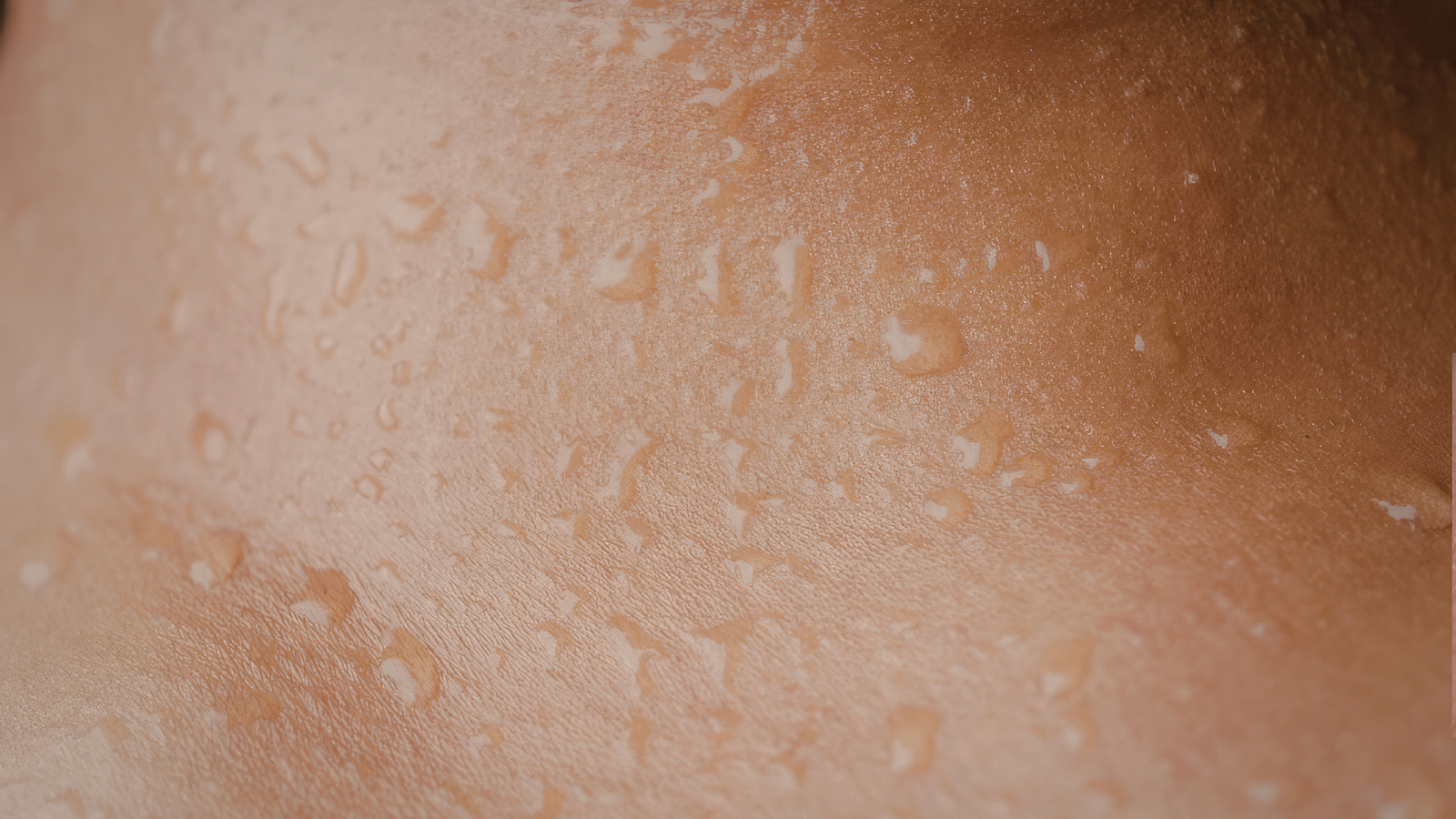
Uneven skin tone and uneven skin texture are two separate problems with different underlying causes. Uneven tone refers to pigmentation inconsistencies like dark spots and patches, while uneven texture refers to surface smoothness: bumps, roughness, and enlarged pores. They often overlap, but treating only one won't correct the other. A targeted routine needs separate actives for each.
What Are You Really Dealing With?
Most people describe their skin as "not looking even" without realising they're often dealing with two separate concerns at once. Skin tone and texture are distinct qualities with distinct biological drivers, and each responds to different actives.
Run your fingers across clean skin in natural light. Does it feel smooth but look patchy? Or does it feel rough even when the colour looks consistent? Your answer changes everything about how you treat it.
Uneven Skin Tone
- Dark spots, sun spots and age spots
- Post-acne marks (PIH)
- Melasma from hormonal changes
- Patchy discolouration on cheeks, forehead, upper lip
Surface may feel smooth. Colour variation creates the uneven appearance.
Uneven Skin Texture
- Bumpy or rough-feeling skin
- Enlarged, visible pores
- Fine lines catching the light
- Flaky dullness from dead cell buildup
- Pitted marks from old acne
Colour may look even. Surface catches light unevenly.
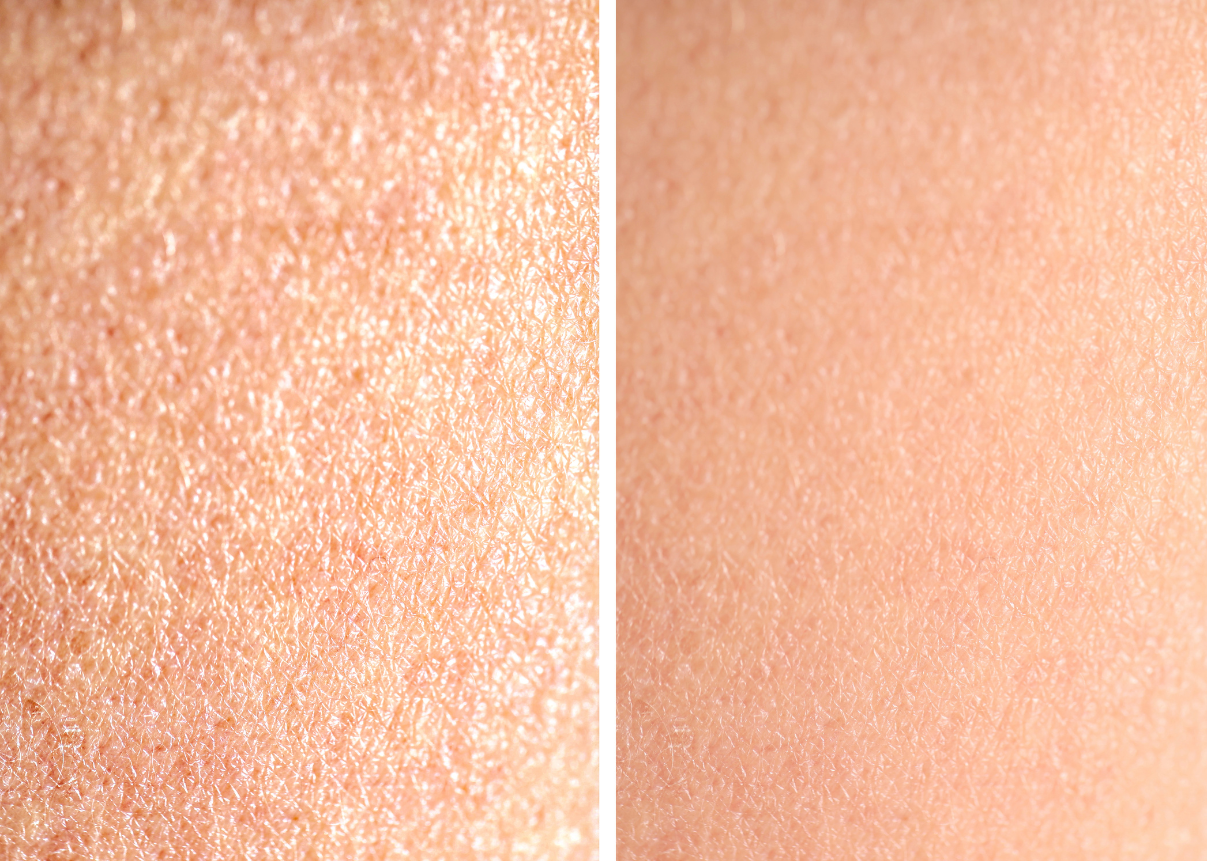
Left: Pigmentation inconsistencies (tone). Right: Rough surface and enlarged pores (texture).
How to Tell Which Problem You Have
Check which observations match your skin in natural light, on a cleansed face with no makeup.
| What You Observe | Likely Concern |
|---|---|
| Skin feels smooth but looks patchy | Uneven Tone |
| Skin feels bumpy or rough, colour is even | Uneven Texture |
| Skin feels rough AND shows dark spots | Both: Layered Treatment |
| Makeup sits smoothly but doesn't blur discolouration | Uneven Tone |
| Makeup looks cakey or highlights fine lines | Uneven Texture |
| Skin looks dull even after cleansing | Often Dead Cell Buildup |
What Causes Uneven Skin Tone?
Pigmentation inconsistencies originate in melanocytes, the pigment-producing cells in the skin. When these cells become overactive or distribute melanin unevenly, the skin takes on a patchy appearance.
UV Damage
UV light is the strongest trigger. It stimulates melanin production in concentrated clusters, producing sun spots and worsening existing pigmentation over time.
Post-Inflammatory Hyperpigmentation
Acne, insect bites, cuts, and aggressive skincare trigger localised melanin deposits during healing. These marks can take months to fade without targeted treatment.
Hormonal Pigmentation (Melasma)
Pregnancy, oral contraceptives, and hormonal fluctuations trigger melasma, symmetrical brown patches on cheeks, forehead, and upper lip.
Indian Skin and Higher Melanin
Higher baseline melanin density means pigmentation responses are stronger and longer-lasting, requiring two-stage regulation rather than single-mechanism brighteners.
What Causes Uneven Skin Texture?
Texture issues originate at the skin surface and upper dermis, driven by cellular turnover, hydration, and structural integrity.
Dead Skin Cell Buildup
The skin naturally sheds dead cells every 28 days, but this cycle slows with age and environmental stress. Accumulated cells create a rough, dull surface.
Enlarged Pores and Sebum
Pores appear larger when filled with trapped sebum and dead skin. Over time, stretched pores contribute to a bumpy surface across the nose and forehead.
Acne Scarring
Inflammatory acne can damage dermal structure, leaving behind rolling, boxcar, or ice-pick scars that require a different intervention from surface texture issues.
Collagen Loss and Dehydration
As collagen production slows, skin loses firmness and fine lines become visible. Dehydrated skin shows more texture because the natural plumping effect is lost.
Skincare for Uneven Skin Tone: What Actually Works
The right serum for uneven skin tone regulates melanin at multiple stages: tyrosinase inhibition (stopping melanin production at the source) combined with melanin transfer reduction (preventing pigment from reaching surface skin cells). A two-stage approach is far more effective than single-mechanism brighteners, especially for Indian skin.
Kinoko Labs Anti-Pigmentation Serum
Built around a two-stage melanin regulation approach with mushroom-derived bioactives at the core.
Skincare for Uneven Texture: What Actually Works
Texture improvement requires a combination of gentle exfoliation to clear dead cells and multi-depth hydration to plump the surface and support cellular turnover. Aggressive exfoliation with high-percentage AHAs or physical scrubs often worsens texture by damaging the skin barrier.
Kinoko Labs Anti-Wrinkle Serum
Addresses texture through hydration at different skin depths and mushroom-derived renewal actives.
How to Build a Routine for Both Concerns
When layering both serums on the same evening: apply the Anti-Pigmentation Serum first (lighter consistency, acts at the cellular level), wait 60 seconds, then apply the Anti-Wrinkle Serum. Finish with moisturiser to seal in both actives.
- Gentle low-pH cleanser
- Anti-Pigmentation Serum
- Moisturiser
- Broad-spectrum SPF 30+ (essential)
- Double cleanse (SPF, makeup, pollution)
- Anti-Pigmentation or Anti-Wrinkle Serum (alternate)
- Moisturiser
Common Mistakes When Treating Both Concerns
- Using one product and expecting it to fix both. Pigmentation and texture have different biological drivers.
- Over-exfoliating in pursuit of smooth texture. It damages the barrier and can worsen pigmentation.
- Skipping SPF while using pigmentation actives. UV re-triggers the melanin the serum is correcting.
- Quitting after two weeks. Clinical change for tone takes 28+ days; texture takes 4 to 8 weeks.
- Applying actives to damp skin. This dilutes concentration and reduces effectiveness.
- Mixing too many actives. This can cause irritation that worsens both concerns.
How Long Does Treatment Take?
Consistency matters more than intensity. Daily use of well-formulated serums outperforms sporadic use of high-strength actives.
Weeks 2 to 4: Surface Smoothness
First measurable improvement in texture. Skin feels softer, looks less dull. Enzymatic exfoliation clears dead cell buildup.
Weeks 4 to 6: Tone Shift Begins
First visible change in pigmentation. Post-acne marks start to soften; sun spots appear slightly lighter.
Weeks 6 to 8: Structural Texture Improvement
Deeper hydration actives take effect. Fine lines are less prominent, pores appear tighter, skin surface more uniform.
Weeks 8 to 12: Comprehensive Improvement
Meaningful visible improvement across both concerns. Melanin regulation is cumulative; continued use deepens the result.
Not Sure Where to Start?
The Discovery Box includes 5ml of all five Kinoko Labs serums, a practical way to trial the Anti-Pigmentation and Anti-Wrinkle pairing before committing to full sizes.
Explore the Discovery Box →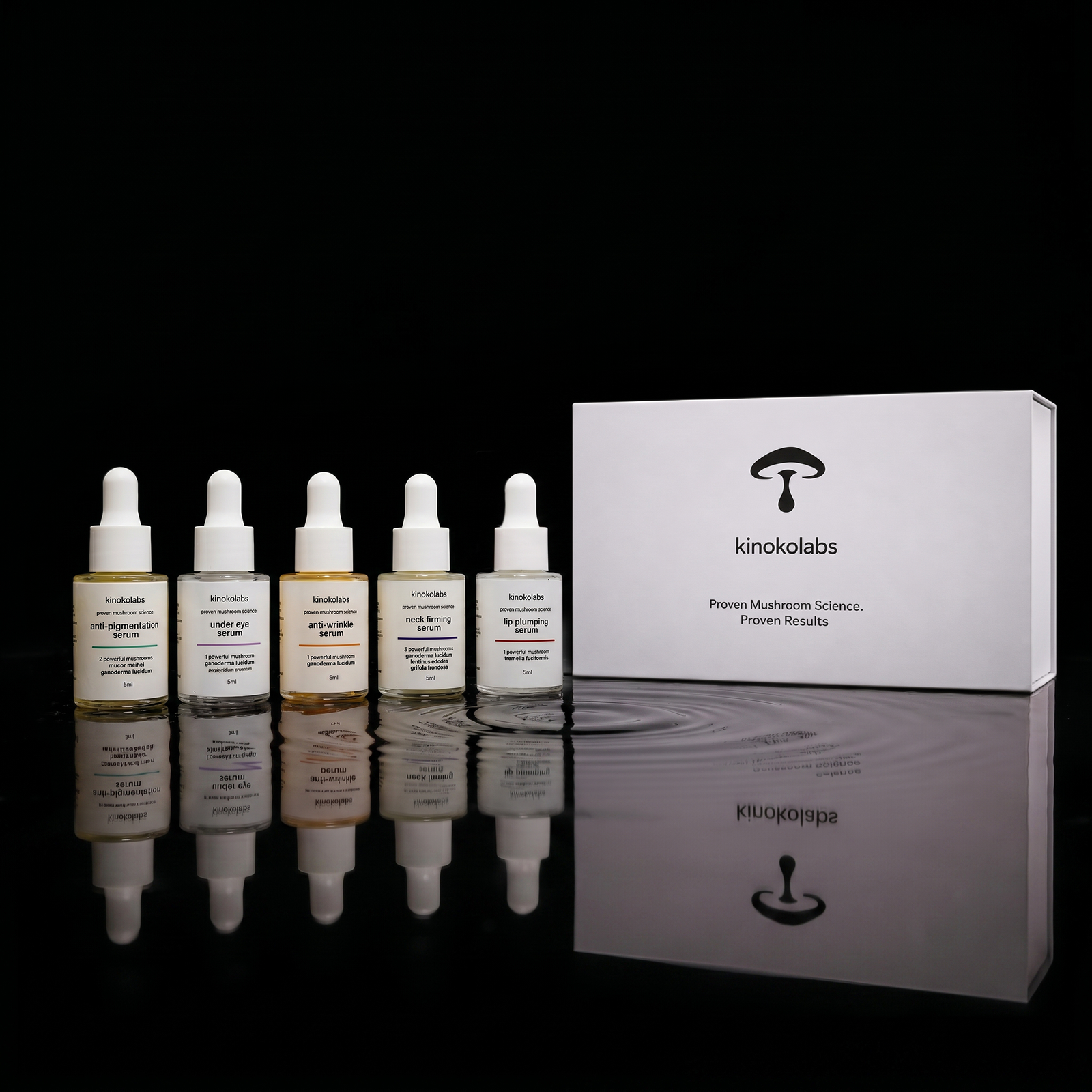
Find Your Formula
| Concern | Suggested Formula |
|---|---|
| Uneven skin tone, dark spots, post-acne marks | Anti-Pigmentation Serum → |
| Uneven skin texture, fine lines, and facial sagging | Anti-Wrinkle Serum → |
| Under-eye darkening, puffiness, and periorbital fine lines | Under Eye Serum → |
| Neck sagging and neck tightening | Neck Firming Serum → |
| Lip volume loss and lip lines | Lip Plumping Serum → |
Your Questions, Answered
Is uneven skin tone the same as uneven skin texture?+
No. Uneven skin tone refers to colour inconsistencies like dark spots and hyperpigmentation. Uneven skin texture refers to surface smoothness: bumps, roughness, and dullness. They have different causes and need different treatments, though they often co-exist.
Can one serum fix both skin tone and texture?+
Not fully. Most effective routines pair a pigmentation-focused serum with a texture-focused serum. The Anti-Pigmentation Serum does contribute to texture improvement through enzymatic exfoliation, but comprehensive texture correction needs dedicated hydration and renewal actives.
Why does Indian skin tone take longer to correct?+
Higher baseline melanin density means the pigmentation response is stronger and longer-lasting. Two-stage melanin regulation works better than single-mechanism brighteners for Indian skin, and consistent SPF use is essential to prevent re-triggering.
Can I use both serums on the same day?+
Yes. Apply the Anti-Pigmentation Serum first, wait 60 seconds for absorption, then apply the Anti-Wrinkle Serum. Alternatively, alternate nights if your skin is sensitive.
Do I need SPF if I am treating texture, not tone?+
Yes. UV damages collagen and triggers oxidative stress, both of which worsen texture over time. Daily broad-spectrum SPF 30+ is non-negotiable regardless of which concern you are treating.
How soon will I see results?+
Expect surface smoothness to shift within 2 to 4 weeks, pigmentation within 4 to 6 weeks, and comprehensive improvement across both in 8 to 12 weeks of consistent twice-daily use.
